
When you're looking for top activewear brands, you're probably trying to figure out which ones actually deliver on comfort, durability, and style. The activewear market is packed with options, but not all brands are created equal—and honestly, what works for someone else might not work for you.
The good news? There are solid brands out there that specialize in different activities and price points. Whether you're into running, yoga, strength training, or just want gear that works for everyday life, this breakdown will help you find what actually fits your needs.
In this article
- The Premium Players in Top Activewear Brands
- Emerging Brands Changing the Game
- Activity-Specific Leaders Among Top Activewear Brands
- What Makes Top Activewear Brands Stand Out
- Fashionable Sportswear as Its Own Category
- How to Choose the Right Top Activewear Brand for You
- Top Activewear Brands Across Different Price Points
- What Research Says About Activewear Performance
- The 30-Day Test for Top Activewear Brands
- Building Your Activewear Wardrobe Smart
The Premium Players in Top Activewear Brands
When people think of top activewear brands, names like Lululemon, Adidas, Nike, and Vuori usually come up first. And yeah, there's a reason they're everywhere.
Related: Best Activewear Brands for Men 2026: Top 6 Ranked
Related: Best Activewear & Athleisure Brands 2026: Top 6 Ranked
Related: Best Activewear Brands for Women 2026: Top 6 Ranked
Related: Best Luxury Activewear Brands 2026: Top 6 Ranked
Lululemon dominates the yoga and lifestyle space. They're known for high-quality fabrics, thoughtful design, and gear that feels premium. The catch? Their prices are steep, and they've been experiencing a shift—older customers are moving away as younger shoppers adopt the brand. If you have the budget and want to invest in pieces that last, Lululemon is solid.
Adidas and Nike are the giants of athletic performance. They focus on running, cross-training, and sport-specific gear. Their R&D is unmatched, and you're paying for decades of research into fabric technology and fit. These brands excel when you're targeting a specific sport.
Vuori sits in that sweet spot between premium and accessible. They're known for comfort and versatility—their pieces work for the gym AND everyday wear. That's huge if you want one wardrobe, not two.
Emerging Brands Changing the Game
Not every top activewear brand is a household name. Some newer players are carving out real space in the market.
Eterne is gaining serious traction right now. Their positioning? "Cosy, cashmere, chic." They're blending comfort with elevated aesthetics—think luxury fabrics in modern silhouettes. If you want activewear that feels indulgent and works as everyday wear, this is the lane they're in.
The key insight here is that emerging brands are often more nimble. They can respond to what customers actually want faster than legacy brands. That means you might find pieces that feel more innovative or aligned with your specific lifestyle.
Activity-Specific Leaders Among Top Activewear Brands
Here's something important: the best activewear brands tend to specialize. A brand crushing it in yoga might not nail running gear, and vice versa.
For Yoga: Lululemon leads here. Their fabrics are engineered for breathability and stretch recovery. But honestly, any high-quality brand with four-way stretch will work for yoga.
For Running: Nike and Adidas dominate. They've invested heavily in moisture-wicking, impact absorption, and aerodynamic cuts. If you're serious about running performance, these two are your benchmark.
For Tennis: Nike and Adidas again. Their court-specific lines include stabilization features and durability for lateral movement.
For Everyday Versatility: Vuori and emerging lifestyle brands are winning. They prioritize pieces that work in the gym and on the street.
What Makes Top Activewear Brands Stand Out

Beyond hype and marketing, here's what separates the best from the noise:
- Comfort over gimmicks: The brands that last prioritize how clothes actually feel on your body. That beats trend chasing every time.
- Durability: Quality fabrics, strong seams, and thoughtful construction mean your pieces survive dozens of washes and workouts.
- Multi-category fit: Top brands create pieces that work for multiple activities and occasions, not just one sport.
- Inclusive sizing and options: More brands are recognizing that coverage and modesty matter to their customers. FITH specializes in this space, offering modest activewear that doesn't sacrifice style or performance—with options like the Flex - Workout Leggings 2.0 and Non-Slip Workout Hijab designed for serious athletes.
- Price-to-performance ratio: The best brands don't always cost the most. They offer genuine value relative to what you're getting.
Fashionable Sportswear as Its Own Category
Here's a trend worth noting: "fashionable sportswear" is now its own category. It's distinct from pure performance gear.
Consumers increasingly want workout clothes that look good enough to wear to coffee, run errands in, or just exist in publicly. That's shifted how top activewear brands approach design.
Luxury crossover is real too. Brands blending athletic function with premium fabrics (cashmere, high-end cotton blends) and chic styling are gaining serious ground. They're targeting style-conscious people who refuse to compromise on comfort.
If this resonates with you—if you want activewear that works as everyday wear—look for brands that design pieces with that dual purpose in mind from the start. It changes everything.
How to Choose the Right Top Activewear Brand for You
Here's the real talk: the "best" brand depends entirely on your priorities and body.
Ask yourself:
- What's your primary activity? (Yoga, running, strength training, etc.)
- What's your budget? (Premium, mid-range, accessible)
- Do you need specific coverage or fit requirements?
- Do you want pieces that transition to everyday wear?
- What's important to you in fabric quality? (Breathability, durability, softness, stretch recovery)
Answer these honestly, and you'll narrow down which brands actually serve you—not the other way around.
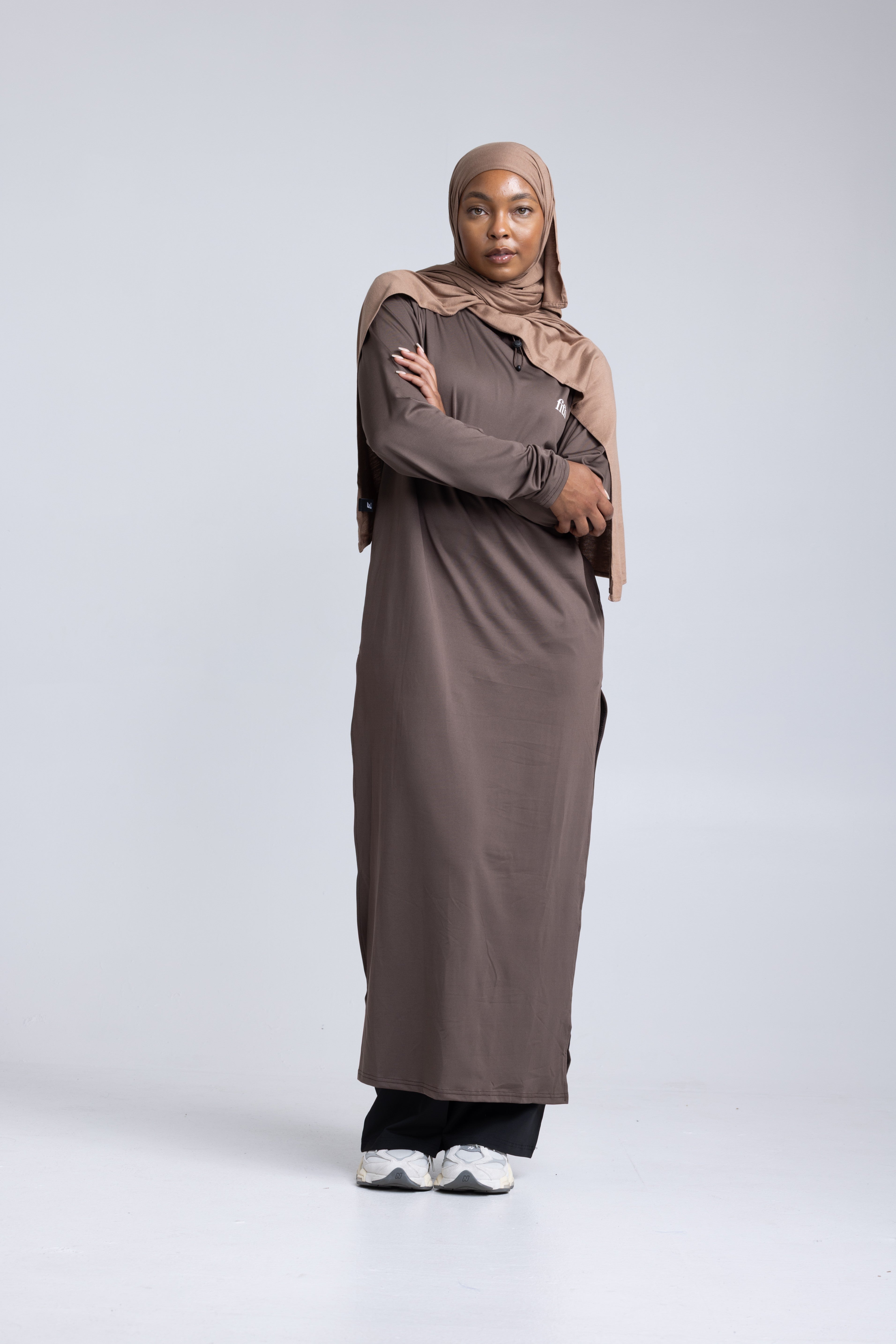
If coverage and modesty are priorities, brands like FITH are built specifically for that. They offer pieces like the MODAL 2.0 - Modest Long Sleeve Top and MODA - Modest Workout Abaya (Slim Fit) that deliver performance without requiring you to compromise on what you're comfortable in.
Top Activewear Brands Across Different Price Points

Let's break this down by budget, because that's real:
Premium ($150+): Lululemon, Vuori, Eterne. You're paying for premium fabrics, thoughtful design, and pieces meant to last years.
Mid-Range ($50-150): Nike, Adidas, Athleta, plus specialized brands like FITH. You get quality without the luxury price tag. Performance is solid, and you can build a whole wardrobe without breaking the bank.
Accessible ($20-50): Brands like Athleta's basic lines, Old Navy Active, Target All in Motion. These work fine for casual workouts. Just don't expect the same longevity as premium options.
Real talk: investing in mid-range pieces from reliable brands often beats buying multiple cheap items. You'll spend less overall and actually keep wearing them.
What Research Says About Activewear Performance
According to peer-reviewed studies on athletic apparel, fabric technology genuinely impacts performance. Moisture-wicking, compression, and breathability aren't just marketing terms—they affect how your body regulates temperature and recovers during exercise.
That said, you don't need the most expensive option to get these benefits. Mid-range brands offer solid technical fabrics. Where premium brands earn their price is usually in design precision, fabric blends, and durability over time.
The 30-Day Test for Top Activewear Brands
Here's a practical hack: most solid brands offer returns or guarantees. Use them.
Buy from a brand, wear the pieces for 30 days, then decide. Does the fabric hold up? Do you actually reach for these pieces? Is the fit what you expected after a few washes? That's your answer.
Many top activewear brands now offer risk-free returns—sometimes 60-90 days. Take advantage. There's no point in settling for gear you don't love just because you already paid for it.
Building Your Activewear Wardrobe Smart
You don't need 20 pieces from 10 different brands. You need a small collection of versatile pieces from brands you trust.
Start with: a good sports bra or compression top, one pair of versatile leggings, one looser bottom option, and one layer for warmth or coverage. Build from there based on your actual activities.
Pieces that work for multiple purposes are your secret weapon. That's why brands focusing on versatility and everyday wear are gaining momentum. If your activewear functions as casual wear too, you're actually wearing and keeping those pieces.
What About Sustainability in Top Activewear Brands?
More consumers are asking about this, rightfully. Look into a brand's material sourcing and manufacturing practices if that matters to you. Some premium brands are transparent about this; others less so.
Long-term durability is actually one form of sustainability—gear that lasts 5 years is better than pieces you replace annually.
Do I Need Multiple Brands or Can One Brand Cover Everything?
Realistically? Most people benefit from 2-3 brands. One for performance-specific gear (like Nike for running), one for lifestyle/versatility (like Vuori), and maybe one that aligns with your specific values or needs—whether that's pricing, aesthetics, or fit (like FITH for modest, faith-aligned options).
Trying to get everything from one brand often means compromising somewhere.
Are Expensive Activewear Brands Worth It?
Not always. Premium pricing sometimes reflects branding and retail overhead more than actual quality. Mid-range brands often deliver 85% of the performance at 50% of the price.
Spend more if: you're serious about a specific sport, you know you'll wear something for years, or the brand specifically addresses needs that matter to you. Otherwise, mid-range is usually the sweet spot.
What's the Best Way to Make Activewear Last Longer?
Wash in cold water, skip the dryer, and don't use fabric softener. These simple steps extend the life of your pieces significantly. Quality fabrics appreciate this treatment more than cheap ones, which is another reason investing in better brands pays off over time.